Late yesterday, a panel of the Ninth Circuit Court of Appeals issued a new ruling striking down the third iteration of the Trump Administration’s Executive Order barring travel from a series of mostly Muslim countries, marking the end of a year that has seen the policy have far more defeats at the judicial level than successes:
A federal appeals court ruled Friday against President Trump’s latest travel ban, saying that it “exceeds the scope of his delegated authority,” but that it was ultimately for the Supreme Court to decide.
A three-judge panel of the United States Court of Appeals for the Ninth Circuit in Seattle affirmed the decision of a federal judge in Hawaii who ruled on Oct. 17 that the order was unlawful on statutory grounds.
The ruling on Friday was a procedural but important step. This month, the Supreme Court allowed the ban — the third version issued by the Trump administration — to take effect for now, and encouraged the appeals courts to rule on the case, a sign that it intended to take up the matter. The Court of Appeals for the Fourth Circuit is considering a similar ruling out of Maryland.
Neal Katyal, who argued the case before the Ninth Circuit court for the state of Hawaii, hailed the decision. “We are very pleased the Court of Appeals recognized that the president’s latest travel ban is flatly illegal,” he said, “and that his order defies the law Congress has laid down.”
Lauren Ehrsam, a spokeswoman for the Justice Department, said the Trump administration was “pleased” that the Supreme Court had already allowed the government to carry out the order.
“We continue to believe that the order should be allowed to take effect in its entirety,” she said.
The Supreme Court asked this month that both the Ninth and Fourth Circuit courts rule expeditiously to enable it to take up the case. It will likely wait on the Fourth Circuit opinion before it decides whether it will hear the appeal and “finally decide to resolve this issue,” said Carl Tobias, a law professor at the University of Richmond.
Mariko Hirose, the litigation director for the International Refugee Assistance Project, which is one of the main plaintiffs suing the government in the Fourth Circuit court, said the Ninth Circuit decision was important because “it affirms what the parties have been saying — that this ban is just as unlawful as the prior versions.”
The judges said the ban conflicted with immigration law’s “prohibition on nationality-based discrimination,” and that Mr. Trump had failed to prove that the entry of citizens of certain countries would be detrimental to the United States’ interests. They also said that Congress had already passed laws that kept out individuals with known terrorist activity.
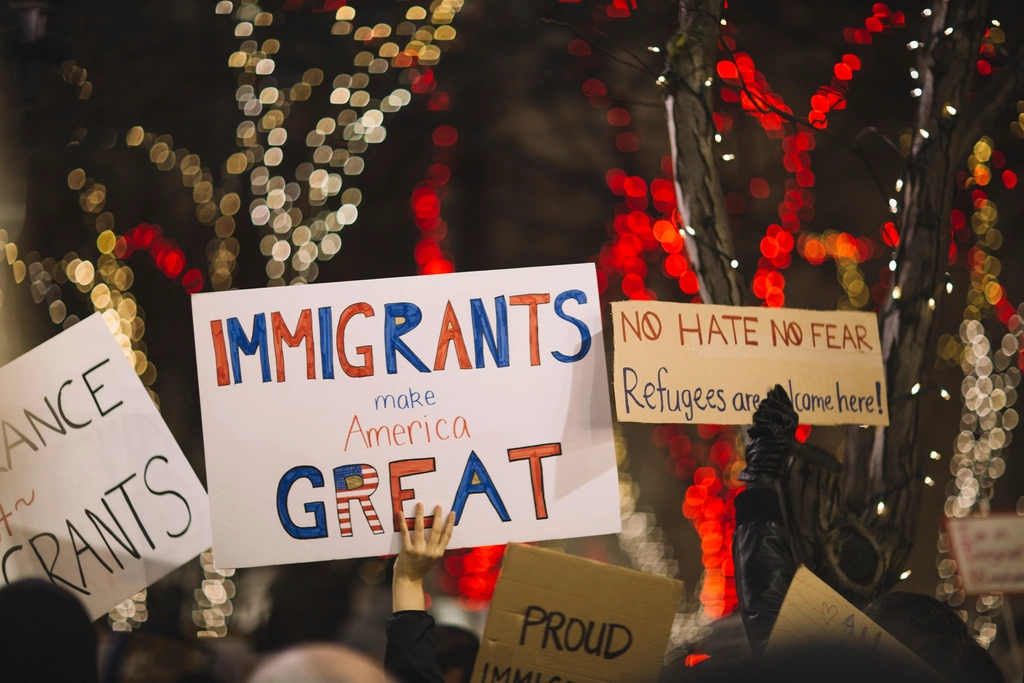
In its latest version of the ban, the Trump administration restricted travel from eight nations, six of them predominantly Muslim. Most citizens of Chad, Iran, Libya, North Korea, Somalia, Syria and Yemen are barred from entering, along with some groups from Venezuela.
Lyle Denniston summarizes the opinion:
At issue in the courts now is the most sweeping of the three executive orders that Trump has signed since January: it imposed a permanent ban on entry into the U.S. by some 150 million foreign nationals from six countries, with entry possible only on a person-by-person basis when individuals are found eligible for visas.
The three-judge panel of the Ninth Circuit Court, acting on an order from the Supreme Court to move swiftly, produced a 71-page ruling 16 days after holding a hearing on the third version. It declared that the order should not be allowed to operate, but it said it could not put that conclusion into actual effect immediately because of the Supreme Court’s temporary order on December 4 saying that full enforcement of the restrictions could begin.
The unanimous opinion of the three judges was filled, end to end, with strongly worded critiques of the executive order the President signed on September 24. It ruled that the challengers of that version were likely to be able to prove, at a full-scale trial, that this version contradicted immigration laws passed by Congress in four different ways.
But, this time, the Ninth Circuit Court added a stern constitutional lecture to its finding of flaws: when the President uses his power as the nation’s Chief Executive in the face of contrary laws passed by Congress, that power “is at its lowest ebb,” the panel said, quoting from a 1952 opinion by a Supreme Court Justice when the highest court nullified President Harry Truman’s seizure of the nation’s steel mills during the Korean war, to keep them operating despite a labor union strike.
Of all of the legal findings made by the federal courts as they reviewed the President’s efforts to curb immigration, efforts he has been making since one week after he took office in January, none matched the constitutional intensity of Friday’s ruling.
None of the individual trial judges or appeals courts that have examined any of the Trump immigration restrictions has made that broad constitutional declaration before. In a prior decision by the Fourth Circuit Court, those judges ruled that the second Trump executive order probably was an unconstitutional form of religious discrimination, because it targeted only the people of countries with Muslim majorities.
The Ninth Circuit Court, as it has done previously, declined to rule on the religious bias claim made by the challengers. It did not need to reach that question, it said, because of its ruling that the third version probably will be ruled invalid under immigration statutes. Its constitutional declaration about presidential power was added to those four apparent violations of specific statutes.
Congress, the panel wrote, is given the primary authority to control U.S. immigration policy and, while it has given presidents wide discretion to curb entry by foreign panels, but that power is not unlimited and President Trump appears to have far exceeded those limits.
The panel appeared to be deeply disturbed by the claims that the President’s lawyers had made in defending the latest order – that is, that “the President, at any time and under any circumstances, could bar entry of all aliens from any country” and that “no federal court – not a federal district court, nor our court of appeals, nor even the Supreme Court itself – would have Article III jurisdiction” based on the breadth of the claim to White House power.
Since Congress has never voted to strip the courts of their authority to review presidential orders banning foreign entrants, the opinion commented, “we doubt whether the government’s position could be adopted without running roughshod over the principles of separation of powers enshrined in our Constitution.”
(…)
In concluding that the President had probably failed to obey immigration laws passed by Congress, the Ninth Circuit Court concluded that Trump appeared to have (1) exceeded powers given by Congress to bar entry into the U.S. of foreign nationals, (2) failed to make the specific finding imposed by Congress that the foreign nationals being kept out would harm United States interests, (3) violated a congressionally-imposed bar based of the nationality of those excluded, and (4) lacked the authority under his own Executive powers to impose the curbs without explicit power given by Congress.
“The Executive,” the panel remarked, “cannot without assent of Congress supplant its statutory scheme [for immigration] with one stroke of a presidential pen.”
Although President Trump has claimed, as to each of the versions of his immigration curbs, that they were necessary to help ensure that terrorists do not enter this country, the panel rejected that claim as it had before. It commented this time the “national security is not a talismanic incantation that, once invoked, can support any and all executive power” in applying the authority that Congress has assigned to the presidency.
It was in discussing the fourth point on immigration authority – that is, the lack of presidential power to bar entry without congressional permission – that the Ninth Circuit Court panel made its remarks about the weakness of the power that Trump had exercised.
In concluding that section of its opinion, the panel wrote that “the President lacks independent constitutional authority to issue the [third version], as control over the entry of aliens is a power within the exclusive province of Congress.
This ruling comes just a few weeks after the Supreme Court lifted the temporary injunction that had been placed on enforcement on the new version of the travel ban, allowing it to go on into effect pending further rulings in the lower courts. That ruling, however, was not a ruling on the merits of the case and did not have a real impact on the two cases proceeding in different parts of the country dealing with this supposedly final and indefinite version of the ban. The rulings from the two District Court judges, one in Maryland and one in Hawaii, came just one day before the revised indefinite travel ban was set to go into effect. Under the new version of the ban, travel to the United States was barred to virtually everyone from Iran, Libya, Syria, Yemen, Somalia, and Chad, all six of which are majority Muslim nations. The order also banned travel to the United States from North Korea and barred certain individuals with ties to the government of Venezuela from traveling to the United States. As I noted when the revised order was released, the addition of Chad was somewhat odd given the fact that this nation had been working with the U.S. for years in the fight against Boko Haram and other African terror groups and the fact that Chad itself has not been a significant source of terrorism. The other additions to the list, North Korea and Venezuela, meanwhile, appeared at the time to be a deliberate diversion given the fact that there is essentially no immigration of any kind from North Korea into the United States and the limits on travel from Venezuela only apply to a handful of people. The clear intent of the ban, then, was to target mainly the majority Muslim nations on the list.
As both judges found in their respective opinions, this new order adds significantly to the temporary ban issued in late January which was blocked by a Federal District Court Judge in Washington state and the Ninth Circuit Court of Appeals earlier this year. After those orders, the Administration issued a revised ban that purported to address the problems pointed out in the initial order. That order purported to make certain changes to the bill but was itself struck down both by Federal Judges across the nation and by the Fourth and Ninth Circuit Courts of Appeal. In June, the Supreme Court issued a ruling regarding the Trump Administration’s Executive Order that banned travel from six predominantly Muslim nations that upheld the ban in some respects but also ruled that it could not be applied to all immigrants from these nations. Specifically, the Court ruled that exceptions must be made for people with valid visas, and those with bona fide family or business connections to the United States, although it didn’t specify what it meant by that. The injunctions that were issued by these Judges were later upheld by both the Fourth and Ninth Circuit Courts of Appeal, at which point the Trump Administration appealed to the Supreme Court.
Perhaps the most interesting thing about this unanimous opinion from the Ninth Circuit Panel, which was made up of three Clinton appointees, is the extent to went beyond previous rulings on other ban and essentially held that the President had violated the Constitution by exceeding the authority granted him by Congress and that he had acted outside the scope of Executive Branch authority without getting approval from Congress. Potentially, this makes the ruling stronger on appeal that the rulings on the previous versions of the ban since it relies on statutory and Constitutional law to a far greater extent and relies less on things such as the President’s own statements about the ban as a candidate and on Twitter along with the statements of Administration officials and Trump supporters regarding the purpose of the ban. To be sure, the opinion still raises those issues as well as the arguments regarding the bans unconstitutional effort to discriminate in the enforcement of immigration law based on religion. However, the fact that the opinion bases the strongest parts of its argument on the Constitutional and statutory issues that Denniston discusses above potentially makes for better prospects on appeal for the Plaintiffs challenging the ban.
From here, of course, the next steps should be familiar. The Federal Government has the option of either seeking en banc review before the full Ninth Circuit or seek review by the Supreme Court. Given the fact that granting en banc review is discretionary and that the full Ninth Circuit is unlikely to be much more favorable to the Federal Government than this panel was, it seems most likely that the Feds will take the matter to the Supreme Court. In addition to this case, there is a case pending before the Fourth Circuit Court of Appeals that was argued earlier this month within days of the Ninth Circuit case. While we can’t be sure when an opinion will come in that case, it could come as early as next week after Christmas if the Court is ready to release it. In any case, this is some bad legal news for the Administration to end the year on.
Here’s the opinion:
Hawaii Et Al v. Trump Et Al Third Travel Ban Opinion by Doug Mataconis on Scribd