G8 and EU Growing Pains
Two articles cited in today’s Small Wars Journal roundup have almost nothing to do with wars, small or otherwise, but are nonetheless interesting in showing the state of flux of some key international institutions.
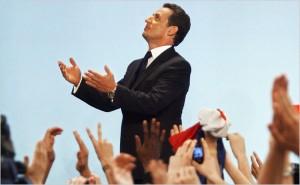 Steven Erlanger reports on a bold attempt to forge a “Union of the Mediterranean” which would be something of a minor league for the European Union.
Perhaps the grandest new idea of France’s president, Nicolas Sarkozy, looking to give his presidency of the European Union a lasting stamp, is the Union of the Mediterranean. An effort to bind the 17 nations bordering the Mediterranean Sea with the European Union around regional projects, the new union will be inaugurated next week at a Paris summit meeting.
But as with some of Mr. Sarkozy’s other ideas, the execution has been haphazard. The Union of the Mediterranean has created resistance among vital allies, like the Germans and the Spanish, and confusion within his own government. The result may be more show than substance.
Peter Alford reports on the emergence of what would be a radical transformation of the G8.
The largest, most expensive gathering of world leaders under the G8 banner convenes today confronted by an awesome array of problems, from runaway oil prices and scarce food to flaring inflation and global warming, but with little prospect of real breakthroughs on any front. Failure this year could call seriously into question the viability of the Group of Eight industrialised nations, a 33-year-old gathering originally of the top Western powers, struggling now for relevance against huge shifts in the world’s political and economic geography.
That shift will be underlined when the “Plus 5” developing nations issue for the first time their own communique after meeting the G8 leaders on Wednesday at the Windsor Hotel, the luxurious and now heavily-secured summit site on Lake Toya, in Toyako, near here.
Since the 2005 Gleneagles summit, China, Brazil, India, Mexico and South Africa have met annually as the “G8 plus 5” with the chief summiteers, the leaders of the US, Japan, Britain, Germany, France, Italy, Canada and Russia. But because of their rising economic power, their huge hunger for energy and food and their critical role in deciding a new climate change regime – or not – after the Kyoto Protocol expires in 2012, the Plus 5 communique will carry as much weight as G8 statements.
The summit situation also gives force to calls from France’s Nicolas Sarkozy and Britain’s Gordon Brown, lately joined by Canadian Prime Minister Stephen Harper, for the eight to be expanded to a G13 with the emerging powers as full partners. This idea is strongly resisted by Washington and Tokyo, the Japanese apparently fearing further dilution of their claims to Asian leadership if China gains a seat.
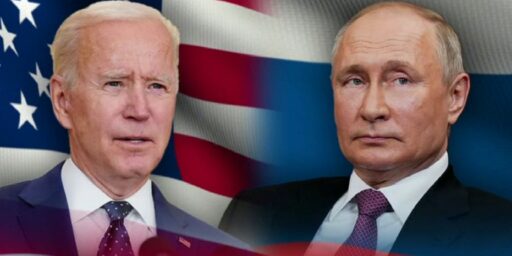
The addition of Russia, a major regional actor but an economic lightweight, to the group in the 1990s opened a Pandora’s box that may be impossible to close. Certainly, China, Brazil and India have stronger claims to membership in the elite economic club than Russia although, I must confess, what Mexico and South Africa are doing on the list eludes me.
Both of these developments — potential breakthroughs in long emerging trends — point to the continual reshuffling of the world order. Attempting to confine major international institutions to its charter members excludes those who now merit membership and who could contribute the the organization’s goals. Opening the window for new members, however, threatens the interests of existing powers in the institution whose ability to steer policy would be diluted.


It interests me that the people who have been arguing against the buyout fever in private industry of late, which results on massive companies which tend to be less responsive to and less respectful of individuals, tend to hold their silence when governments play the same game, as in the EU, or in this case.
Russia has the 11th largest GDP in the world. Not in the class of the U. S., China, or Japan but not a lightweight, either.
Fair enough. Indeed, they’re slightly ahead of India on the list. And Mexico, at 15, is higher than I would have guessed.
Russia is also an oil exporter …
nuff said