Air Force Publishes Phone Book!
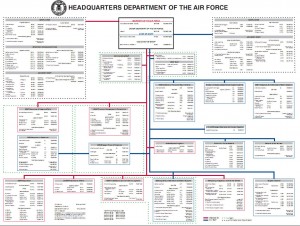 Steven Aftergood notes that, “The United States Air Force has published a detailed organizational chart of its headquarters (pdf) including the names and telephone numbers of key personnel” and points out that this seemingly uninteresting fact “represents a departure from the post-9/11 Pentagon practice of withholding the names and phone numbers of Pentagon officials from publication in the Department of Defense telephone directory.”
Why does DoD withhold its telephone directory when other agencies with national security responsibilities such as the Department of State and the Department of Energy openly publish their telephone directories on their websites?
One answer is “OPSEC,” or “operations security,” meaning the concealment of unclassified indicators to frustrate foreign intelligence collectors. But that rationale could apply equally to Energy and State, which do not embrace it. Besides, the Pentagon itself survived the Cold War without such an extreme secrecy policy.
Another answer is that unlike other agencies, “We were attacked,” as one Pentagon employee told Secrecy News, citing the September 11 terrorist strike on the Pentagon. That is a conversation stopper but not much of an explanation, since there is no known reason to believe that the Pentagon telephone directory was used by the 9/11 terrorists.
Indeed. It’s a truly baffling policy that has been taken to ridiculous extremes. For example, even the various DoD schools that have large civilian faculties — the Service academies, war colleges and so forth — stopped publishing staff directories, which virtually every comparable civilian institution does as a matter of course, on their websites.
There’s probably some logic to keeping the staff listings of some DoD offices private but a blanket policy is absurd. Of course, that’s bureaucracy for you: To say that protecting some office’s information is more vital to the nation’s security that others’ is to set off turf wars. And don’t even get me started on “essential personnel only” policies. . . .

If I remember correctly, the Russians used to ban the publication of maps as a means for protecting itself from invasion. This made a certain amount of sense in a WWII mindset. But with the advent of satellites, it meant that ordinary people would not have maps or have inaccurate maps, while the invaders could have accurate maps based on satellite recon.
I suspect that someone who knows the truth would find holes in the directory (as they should). The “stealth bomber” equivalent today is probably not represented.