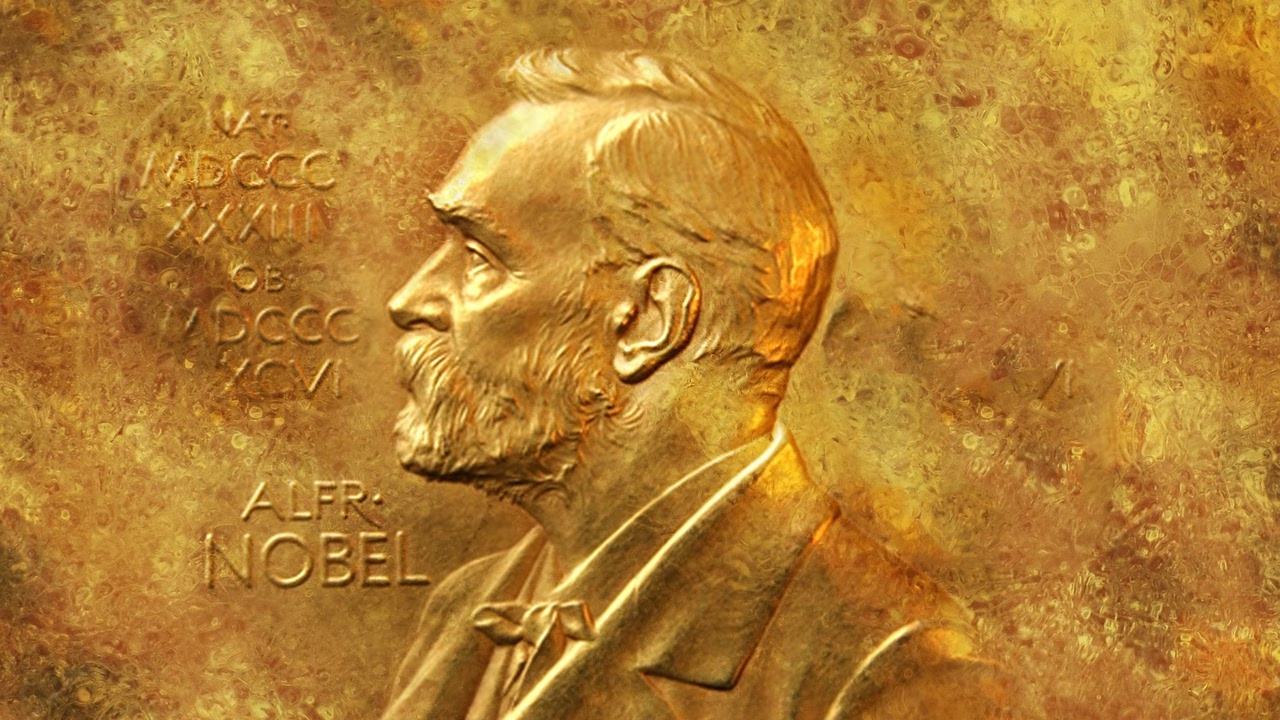
Ron Rotunda and Peter Pham argue in today’s WaPo that it would violate the Constitution for President Obama to accept the Nobel Peace Prize while in office.
Article I, Section 9, of the Constitution, the emolument clause, clearly stipulates: “And no Person holding any Office of Profit or Trust under them, shall, without the Consent of the Congress, accept of any present, Emolument, Office, or Title, of any kind whatever, from any King, Prince or foreign State.”
The award of the peace prize to a sitting president is not unprecedented. But Theodore Roosevelt and Woodrow Wilson received the honor for their past actions: Roosevelt’s efforts to end the Russo-Japanese War, and Wilson’s work in establishing the League of Nations. Obama’s award is different. It is intended to affect future action. As a member of the Nobel Committee explained, the prize should encourage Obama to meet his goal of nuclear disarmament. It raises important legal questions for the second time in less than 10 months — questions not discussed, much less adequately addressed anywhere else.
[…]
An opinion of the U.S. attorney general advised, in 1902, that “a simple remembrance,” even “if merely a photograph, falls under the inclusion of ‘any present of any kind whatever.’ ” President Clinton’s Office of Legal Counsel, in 1993, reaffirmed the 1902 opinion, and explained that the text of the clause does not limit “its application solely to foreign governments acting as sovereigns.” This opinion went on to say that the emolument clause applies even when the foreign government acts through instrumentalities. Thus the Nobel Prize is an emolument, and a foreign one to boot.
Adam Blickstein argues that this contention is absurd, noting that General H. Norman Schwarzkoft, Fed Chairman Alan Greenspan, and others have accepted knightships and other awards whilst holding offices of trust with no complaint. But that’s not much of a counter: Maybe nobody noticed before.
More to the point, though, he points to an old Newsmax article reporting Greenspan was in fact challenged on these grounds by Rep. Howard Phillips and wrote back with a note from the Fed’s chief attorney to wit:
Congress gave its consent to the acceptance of certain gifts and decorations in the Foreign Gifts and Decorations Act (originally enacted in 1966). The Act provides as follows:
The Congress consents to the accepting, retaining, and wearing by an employee of a decoration tendered in recognition of active field service in time of combat operations or awarded for other outstanding or unusually meritorious performance, subject to the approval of the employing agency of such employee.
The Act defines “decoration” to include “an order, device, medal, badge, insignia, emblem or award.” The Department of Justice has ruled that an honorary knighthood is an “order” as permitted by the Foreign Gifts and Decorations Act.
Rotunda and Pham do not make their argument out of pique; they quite charitably say Congress should provide their consent. It turns out, they did so when Obama was five.