Why Isn’t the Army Broken?
 Phil Carter, like a lot of other knowledgeable observers, has been predicting that the strain of the wars in Iraq and Afghanistan would break the Army. It hasn’t. He reflects on this and offers several plausible reasons: the military service ethic, the fact that most soldiers signed up post-9/11 and knew what they were getting into, that turnover is built into the system, and so forth.
Being a few years older, I was wrong on this much earlier than Phil. Throughout the 1990s, I predicted that the constant deployment of Reserve soldiers to peacekeeping operations in places like Somalia, Bosnia, Kosovo, and Haiti would kill the Reserves. No way would people who signed up for “two weekends a month and two weeks during the summer” put up with that high an OPSTEMPO, not when there wasn’t a real war against a real enemy.
Ultimately, though, soldiers like to soldier. We’ve seen time and again that units that deploy to hazardous duty zones have higher rates of re-enlistment than those which don’t. This is true for both Active and Reserve Component units.
A lot of people get out of the Army as soon as they can after the hardships of combat duty. But they’re not the people we wanted manning our senior NCO and officer corps, anyway.
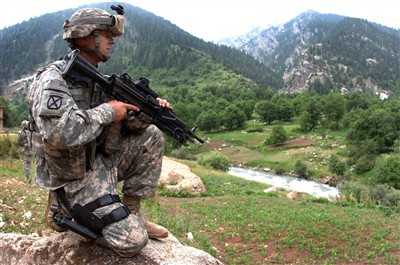
Photo: U.S. Army Spc. Jason Curtis provides security for members of a medical civil action project in Parun, Afghanistan, on June 28, 2007. Curtis is assigned to Charlie Company, 1st Battalion, 151st Infantry Regiment. DoD photo by Sgt. Brandon Aird, U.S. Army. (DefenseLink)

How do you define “broken”. Lower enlistment standards, lower ASVAB scores, lower PT tests, lower unit readiness levels, fratricide, mutiny? I don’t think we are ever going to see a “broken” army b/c there are too many professionals of all ranks in the army. Is the army strained? Of course? Are there problems b/c the deployments? Of course. Then again, we also have a whole lot of Soldiers of all ranks with combat experience which is something that we haven’t had in 20 + years.
before folks start with the labels, I am not a fan of the president’s execution of the war.
“Ultimately, though, soldiers like to soldier.”
This is a truism. They are a different breed of cat and like doing what they do.
“They are a different breed of cat and like doing what they do.”
I have yet to meet any breed of cat that doesn’t enjoy doing what it does.
We are tired and stretched. But we also have a sense of purpose. Still, the Army has made some very significant changes in how it operates in war. We no longer cycle soldiers thru in individual deployments, we deploy units. The Army provides funds to deploying units to see use on items that Commanders deem important. They have a rapid soldier fielding program to issue some “good to haves” (like ballistic eye-wear and insulated synthetic underwear). And they invest in training you in realistic scenarios so you feel you are better prepared.
And that the Army has invested in leadership training which is 180 degrees from what was done during Viet Nam. Any one item isn’t critical but the cumulative impact is profound.
I’ve quoted you and linked to you here.