
An obscure bit of Arizona law has some people wondering if Congresswoman Gabrielle Giffords is in danger of losing her seat in Congress if she has to undergo an extended recovery:
A statute buried in state law says that if a public officeholder ceases to “discharge the duties of office for the period of three consecutive months,” the office shall be deemed vacant and that at such time, a special election could be called to fill the opening.
But in Washington, lawyers quickly concluded that the statute does not apply to members of Congress. The U.S. Constitution provides the qualifications for service in Congress and makes the House the sole judge of those qualifications.
Courts have consistently held that states cannot add qualifications to those in the Constitution and have rejected efforts to remove members of Congress, even through term limits and recalls.
“Legally, it’s not a close call,” said Brian Svoboda, a lawyer for the Democratic Party. “You have a history of interpreting these constitutional decisions and the courts have consistently struck down state laws that have tried to impose additional qualifications beyond those that are set forth in the Constitution.”
It’s really a fairly simple question that Courts have dealt with quite easily in recent years.
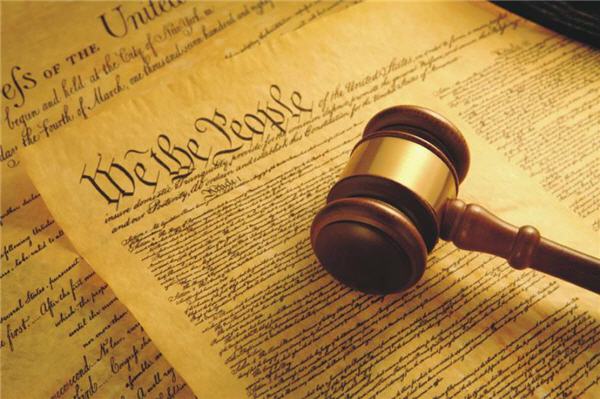
The Constitution provides, in both Article I Section 2 and Article I Section 3 for the qualifications to hold office in Congress.
For the House it says:
No Person shall be a Representative who shall not have attained to the Age of twenty five Years, and been seven Years a Citizen of the United States, and who shall not, when elected, be an Inhabitant of that State in which he shall be chosen (Article I, section 2),
And for the Senate it says:
No Person shall be a Senator who shall not have attained to the Age of thirty Years, and been nine Years a Citizen of the United States, and who shall not, when elected, be an Inhabitant of that State for which he shall be chosen (Article I, section 3).
Additionally, the 17th Amendment says:
The Senate of the United States shall be composed of two Senators from each State, elected by the people thereof, for six years; and each Senator shall have one vote. The electors in each State shall have the qualifications requisite for electors of the most numerous branch of the State legislatures.
In U.S Term Limits v. Thornton, the Supreme Court struck down an Arkansas law that purported to impose a term limit on the state’s Congressmen and Senators and said the following in doing so:
The provisions in the Constitution governing federal elections confirm the Framers’ intent that States lack power to add qualifications. The Framers feared that the diverse interests of the States would undermine the National Legislature, and thus they adopted provisions intended to minimize the possibility of state interference with federal elections.
(…)
In our view, Amendment 73 is an indirect attempt to accomplish what the Constitution prohibits Arkansas from accomplishing directly. As the plurality opinion of the Arkansas Supreme Court recognized, Amendment 73 is an “effort to dress eligibility to stand for Congress in ballot access clothing,” because the “intent and the effect of Amendment 73 are to disqualify congressional incumbents from further service.” 316 Ark., at 266, 872 S. W. 2d, at 357. 42 We must, of course, accept the State Court’s view of the purpose of its own law: we are thus authoritatively informed that the sole purpose of 3 of Amendment 73 was to attempt to achieve a result that is forbidden by the Federal Constitution.
More recently, the New Jersey Supreme Court ruled that the state’s law allowing for recall of elected officials via popular referendum could not be applied to Federal officials:
A recall committee cannot proceed with its effort to unseat U.S. Sen. Robert Menendez, the state Supreme Court ruled today in a decision that strikes down part of the state constitution.
Voting 4-2, the justices said parts of the state law and constitution that allow such recalls are unconstitutional. The decision reverses an appellate court, which had said the recall could proceed but stayed its decision to allow Menendez to appeal.
“The text and history of the Federal Constitution, as well as the principles of the democratic system it created, do not allow the states the power to recall U.S. Senators,” Chief Justice Stuart Rabner wrote for the majority.
(…)
Justice Jaynee LaVecchia pointed out the notion of recalling members of the House of Representatives — U.S. senators originally were chosen by state legislatures — got a thumbs down from the founders. Justice Virginia Long agreed.
The losing side in the New Jersey case has said that they would appeal the case to the U.S. Supreme Court, but their appeal is unlikely to be granted, and unlikely to be ruled upon in time for the 2012 elections if it were.
What these two cases, and others, stand for is the simple idea that states cannot impose additional requirements on Members of Congress beyond those set forth in the Constitution. That means Arkansas cannot impose term limits, the citizens of New Jersey cannot recall an elected Senator, and this Arizona law cannot be applied to Congresswoman Giffords.
That said, the Giffords case does raise another issue for which there is also no Constitutional provision. The Constitution says nothing about how to deal with a Congressman or Senator who may be disabled and unable to fulfill for the duties of their office. This means that a Senator could have a stroke, be disabled for years and unable to work, and the people of their state would be without representation. I’m not suggesting this is a crucial problem, but it is interesting that we have specific provisions for Presidential disability, but nothing to deal with a similar situation in the Legislative and Judicial Branches.
H/T: Jazz Shaw