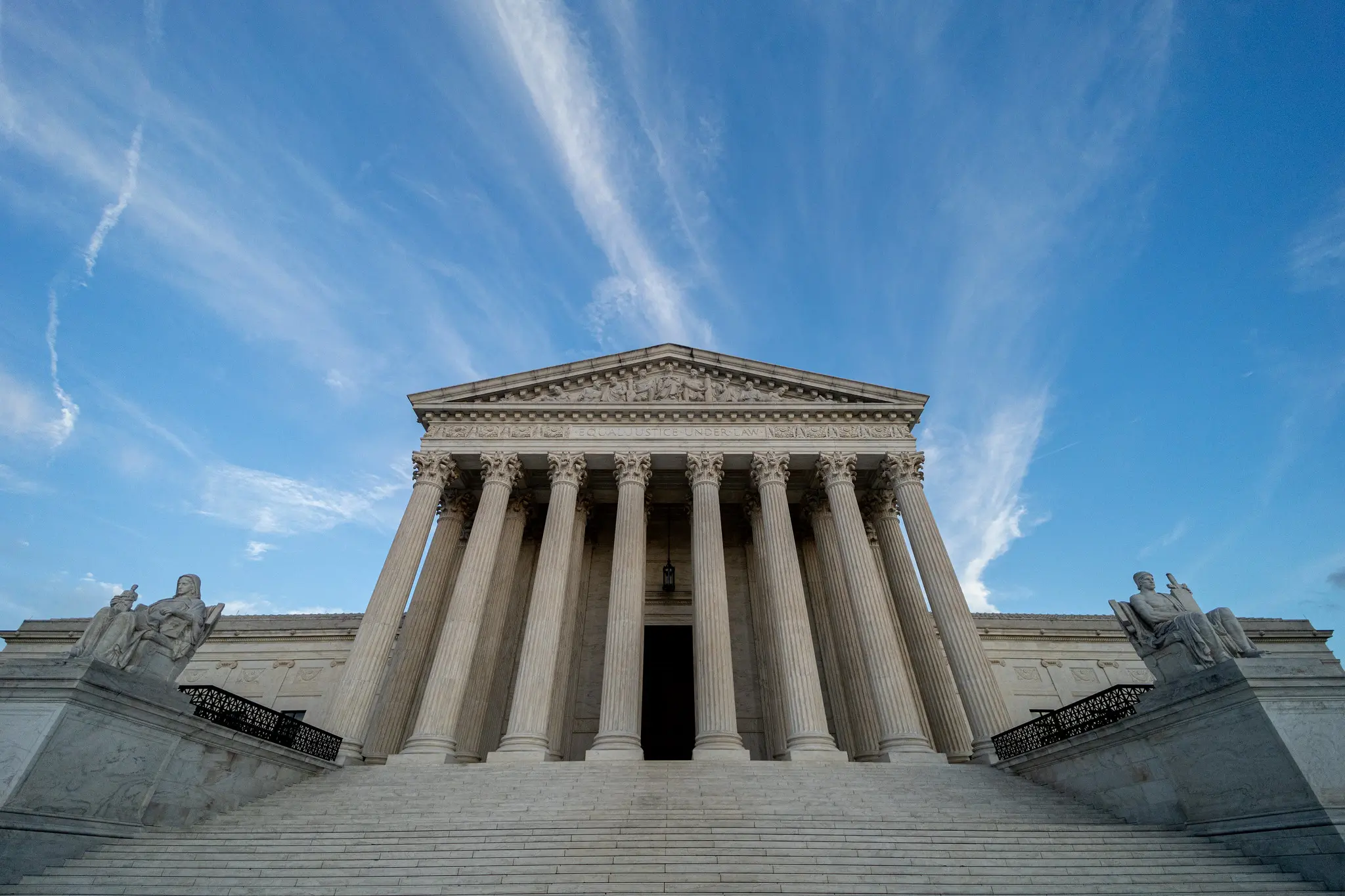
A short-handed Supreme Court issued a surprising and unanimous rebuke to the prosecution of former Virginia Governor Bob McDonnell.
POLITICO‘s Josh Gerstein:
A unanimous Supreme Court has overturned the corruption convictions of former Virginia Gov. Bob McDonnell, ruling that federal prosecutors relied on a ‘boundless’ definition of the kinds of acts that could lead politicians to face criminal charges.
The decision from the eight-justice court could make it tougher for prosecutors to prove corruption cases against politicians in cases where there is no proof of an explicit agreement linking a campaign donation or gift to a contract, grant or vote.
The court’s opinion, written by Chief Justice John Roberts, rejected the government’s position that simply agreeing to meet with someone on account of such largesse could be enough to constitute an official act that could trigger a corruption conviction.
“There is no doubt that this case is distasteful; it may be worse than that. But our concern is not with tawdry tales of Ferraris, Rolexes, and ball gowns. It is instead with the broader legal implications of the Government’s boundless interpretation of the federal bribery statute,” Roberts wrote. “A more limited interpretation of the term ‘official act’ leaves ample room for prosecuting corruption, while comporting with the text of the statute and the precedent of this Court.”
The justices set forth a straightforward rule: “Setting up a meeting, calling another public official, or hosting an event does not, standing alone, qualify as an ‘official act.’”
In addition, the chief justice warned that accepting the government’s stance in the case could chill all sorts of routine interactions between politicians and their supporters.
“Conscientious public officials arrange meetings for constituents, contact other officials on their behalf, and include them in events all the time. The basic compact underlying representative government assumes that public officials will hear from their constituents and act appropriately on their concerns—whether it is the union official worried about a plant closing or the homeowners who wonder why it took five days to restore power to their neighborhood after a storm,” Roberts wrote.
“The Government’s position could cast a pall of potential prosecution over these relationships if the union had given a campaign contribution in the past or the homeowners invited the official to join them on their annual outing to the ballgame. Officials might wonder whether they could respond to even the most commonplace requests for assistance, and citizens with legitimate concerns might shrink from participating in democratic discourse,” the chief justice added.
[…]
“None of this, of course, is to suggest that the facts of this case typify normal political interaction between public officials and their constituents. Far from it. But the Government’s legal interpretation is not confined to cases involving extravagant gifts or large sums of money and we cannot construe a criminal statute on the assumption that the Government will ‘use it responsibly,’” Roberts wrote.
Lydia Wheeler of The Hill adds:
In appealing his conviction, McDonnell challenged the jury instructions specifically. He claimed that the district court misstated the law and the sufficiency of the evidence against him.
Because those errors occurred, the justices said the jury might have made a mistake.
“Because the jury was not correctly instructed on the meaning of an ‘official act,’ it may have convicted Gov. McDonnell for conduct that is not unlawful,” Roberts wrote in the decision. “For that reason, we cannot conclude that the errors in the jury instruction were ‘harmless beyond a reasonable doubt.’ “
[…]
The government argued that McDonnell took meetings, hosted events at the governor’s mansion and contacted staff to help Williams secure independent testing for a new tobacco-based diet supplement called Antabloc. In return, Williams showered him and Maureen with gifts that included $15,000 for their daughter’s wedding reception, the use of Williams’s Ferrari and a Rolex watch.
But the justices said arranging a meeting or hosting an event doesn’t mean McDonnell agreed to help Williams.
“The jury may have disbelieved that testimony or found other evidence that Governor McDonnell agreed to exert pressure on those officials to initiate the research studies or add Antabloc to the state health plan, but it is also possible the jury convicted Governor McDonnell without finding that he agreed to make a decisions or take an action on a properly defined ‘question, matter, cause, suit proceeding or controversy,’” their decision said.
This decision is the Supreme Court at its best, and therefore its most frustrating.
McDonnell clearly abused his office. Quite obviously, taking large donations and turning around and doing favors for the donors as the chief executive of a state is vulgar and unseemly. It’s the definition of corruption. But it probably wasn’t illegal.
The Chief Justice’s opinion recognizes the vulgarity of McDonnell’s actions and nonetheless sees past the case in controversy to understand the precedent that letting the prosecution stand would set. We don’t want prosecutors stretching the bounds of the law to go after people whose actions they dislike. Nor do we want to write criminal law after the fact, punishing actions that we think should have been against the law but weren’t at the time. Beyond that, as Roberts rightly notes, we don’t want to chill legitimate constituent services on the part of our elected officials.