
CNN’s Fareed Zakaria argued last week that the root of the political problems that we’ve seen in recent years related to fiscal issues, such as last month’s absurd spectacle over the debt ceiling, lies in the nature of our system of government and that we’d be better off adopting the Parliamentary system used by most of the rest of the world:
After the S&P downgrade of the United States, no country with a presidential system has a triple-A rating from all three major ratings agencies. Only countries with parliamentary systems have that honor (with the possible exception of France, which has a parliament and prime minister as well as an empowered president).
Juan Linz, professor of social science at Yale, argued that parliamentary systems are superior to presidential systems for reasons of stability. In a parliamentary system, he contended, the legislature and the executive are fused so there is no contest for national legitimacy.
Think of David Cameron in England. He is head of the coalition that won the election, head of the bloc that has a majority in parliament and head of the executive branch as Prime Minister.
In the American presidential system, in contrast, you have the presidency and the legislature, both of which claim to speak for the people. As a result, you always have a contest over basic legitimacy. Who is actually speaking for and representing the people?
In America today, we take this struggle to an extreme. We have one party in one house of the legislature claiming to speak for the people because theirs was the most recent electoral victory. And you have the president who claims a broader mandate as the only person elected by all the people. These irresolvable claims invite struggle.
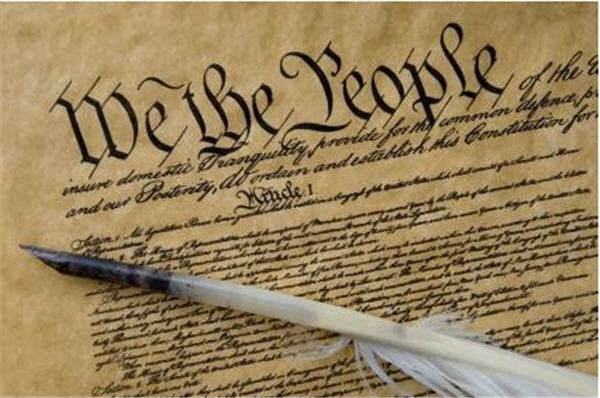
It’s ironic that Zarkaria uses that phrase in the final sentence, because that’s exactly what that Constitution has been described as. The historian Edwin Corwin used the phrase to describe the the relationship between Congress and the President in the foreign policy arena, but it’s really an apt description of the Constitution itself is an invitation to struggle, and many of the political battles we are dealing with today are just an updated version of the same arguments that Jefferson and Hamilton were having more than two centuries ago. What Zarakia seems to decry as a flaw in our system is, in fact, a sign of the system working exactly the way it was intended to. While the Founders recognized the fact that the Articles of Confederation were simply impractical for governing even a small nation located on the eastern coast of North America, they also recognized the dangers of centralized power. That’s why they created a system where three co-equal branches of government are, if things operate as intended, supposed to check each others power, where the states act as checks on the power of the Federal Government, and where the people act as checks on both. It’s an imperfect system, because it was designed by imperfect men for imperfect people, but what Zakaria is really criticizing, it seems, is that the system is actually working the way it was intended to.
Not surprisingly, Zakaria’s indictment of the Constitution has generated much commentary. Peter Wehner at Commentary, for example, flatly rejected the idea that contemporary political failings can be blamed on the nature of American government:
For most of the Obama presidency we had what was essentially a parlimentary system. The president was able to get virtually everything he wanted passed into law, from the stimulus, to the Affordable Care Act, to the Dodd-Frank financial reform legislation, to his budgets, to much more. And look where that got us. The mid-term election of 2010 resulted in Republicans controlling one branch of the legislature, putting a check on Obama’s unprecedented spending binge and his injurious policies. That was all to the good.
What is really driving Zakaria’s commentary, I suspect, is what often happens when liberals are elected and fail: their supporters begin to lay blame on the American system of government. Jimmy Carter’s advisers did the same thing. It turned out the problem then, as now, wasn’t the American system of government; it was the American president. The failures of Obama cannot be laid at the feet of Madison.
Wehner’s colleague Emanuele Ottolenghi, meanwhile points out that Parliamentary systems in both Europe and Japan (which recently saw its own credit rating downgraded from AA to AA3 by Moody’s) haven’t prevented those countries from having fiscal problems worse than ours. In fact, one could make the argument that Parliamentary systems tend to make the types of fiscal problems the world is dealing with today more likely because they contain none of the checks on the growth of government power that our Constitutional system does. Once a political party, or a coalition gains Parliamentary control they are able to ram through whatever programs they wish with little worry that the opposition will be able stop them. Indeed, governments only tend to collapse in these systems when the governing coalition falls apart, or when the party leadership loses confidence in the Prime Minister and his or her cabinet. With many of the nations that now experiencing a sovereign debt crisis once having been governed by Socialist parties, it’s no surprise that they’ve found themselves in a situation where they’re unable to afford the generous welfare state that those parties created out of whole cloth.
On the other side of the argument, E.C. Gach writes at The League Of Ordinary Gentlemen that Zakaria is right in pointing out the flaws of our current system:
Namely, 18th century political institutions no longer reflect the reality of the country. Equal senatorial representation may have been a good solution to the political reality of 1787, but it now makes the nation ungovernable where overwhelming majorities can be thwarted by small minorities and narrow interests.
Like Zakaria, Gach seems mostly frustrated by the fact that the American system of government makes it hard to accomplish what he’d like to accomplish. As I noted above, that’s kind of the point of the system the Founders designed so, in some sense, things are working they way they’re supposed to.
That’s not to say that things are working perfectly, of course. The bipartisan sniping that has led to gridlock in Congress, combined with the tendency of both political parties to demonize the positions of their opponents (Paul Ryan wants to kill Grandma, Barack Obama hates America), makes it very difficult for anything to be accomplished easily. That’s not a reflection of the type of political system we have, though, it’s a reflection of the times we live in and the 365/24/7 news cycle that has taken over politics in the past decade. We’ve had partisan disagreements in the past, sometimes bitter and divisive ones, but other than the dispute over slavery that nearly destroyed the Union, we’ve been able to work through them and accomplish the basic tasks of governing. Today, the problem is that leaders on both sides are talking past each other to their respective bases, and neither side wants to appear willing to back down on what the base considers to be the truly important issues (taxes for Republicans, major entitlement reform for Democrats). Since we presently don’t have a political consensus on very basic issues related to the size and scope of government, these issues are being fought out every day on cable, talk radio, the Internet, and in the Halls of Congress.
Of all the commentary on Zakaria’s article, though, I think it’s Scott Galupo that comes closest to diagnosing the real problem with the American political system. The problem isn’t that our Constitution is making governing impossible, it’s that our political system has sipped away from its moorings in many important respects:
The country’s political system has already slipped from its constitutional moorings, and in just the fashionthat Zakaria seeks and Wehner resists.
Political scientist Jeffrey Tulis’s now-classic The Rhetorical Presidency brilliantly surveyed how presidents since the innovative and/or diabolical Woodrow Wilson have employed public rhetoric, often to the point of demagoguery, to transcend the separation of powers. (It’s worth noting that President Obama took this tack in the debt-ceiling debate, and failed miserably.)
Zakaria points to the filibuster as an extra-constitutional excrescence that has contributed significantly to congressional gridlock. He’s right about the extra-constitutionality of the filibuster, but he’s strikingly naive about just how powerful the presidency has grown at Congress’s expense in the last 100 years.
The rise of what Gene Healy called in his excellent book (available for free here) The Cult Of The Presidency has certainly been one factor in the manner in which American government has become dysfunctional over the years, and it isn’t the only one. Rather than criticizing our system of government, then, people like Zakaria and Gach would do better to examine the manner in which that system has fallen off the rails over the past century, often in an effort to support policies that they no doubt support. Our current problems aren’t James Madison’s fault, they are ours alone.
The fault, dear Fareed, lies not our Constitution, but in ourselves.