working

ADVERTISERS

POPULAR TAGS

ADVERTISERS

 Outside the Beltway 

Falling Out of Love With Obama

A supporter of U.S. Democratic presidential candidate Sen. Barack Obama, D-Ill., holds a poster meaning \'Obama for Chancellor\' prior to Obama\'s speech at the victory column in Berlin Thursday, July 24, 2008. (AP Photo/Miguel Villagran)Josef Joffe pithily captures a point I’ve made repeatedly:

In Berlin, hundreds of thousands will cheer a projection rather than a flesh-and-blood Obama on Thursday. After Inauguration Day, alas, Europe and the world will not face a Dreamworks president, but the leader of a superpower. Whether McCain or Obama, the 44th president will speak more nicely than did W. in his first term. He will also pay more attention to the “decent opinions of mankind.” But he will still preside over the world’s largest military, economic, and cultural power.

This vast power differential is what Germans and Europeans don’t quite fathom in their infatuation with Obama. Their problem was not Mr. Bush, but Mr. Big–America as Behemoth Among the Nations, unwilling to succumb to the dictates of goodness that animate post-heroic, post-imperial, and post-sovereign Europe.

That’s exactly right.  Nor is it Euro-bashing.  I’m a professional transatlanticist these days maintained, even in the most fractious days of the fight over the decision to go to war in Iraq, that the United States and Western Europe had far, far more in common than divided us. But the fact remains is that our geostrategic interests don’t always align and we’ve got the means and will to pursue goals regardless of whether they’re with us.  That, in turn, naturally frustrates them.

Beyond that central point, highlighted and brought to my attention by Patrick Appel, Joffe points out that Obama’s not the pliant, meek fellow that the Germans imagine and are feting with rock star fervor.

Obamania is not about politics, but about desire, dreams, and projections. Obama is not so much a candidate as a canvas, a vast surface onto which Europeans (and half of the U.S. electorate) can paint their fondest fantasies. There hasn’t been anything like it in Western politics since … since … Jack (”Ich bin ein Berliner”) Kennedy, the president Barack Obama so self-consciously mimics, down to the tilt of his head and the inflection of his voice.

This isn’t the “empty suit meme” that Kevin Drum decries but rather a recognition that, while Obma may well be a master politician, he’s still a politician.  And an American one at that.

There are two problems buried in this fantasy. One, Barack Obama is possessed of a pliable identity that oscillates between Barry and Barack, between White and Black, between the Harvard Law Review and the Chicago slums, between a leftish voting record in the Senate and a right-of-center message on the stump. He is neither saint nor softie, but the most consummate power politician to come out of Chicago since Richard Daley the Elder. Following classical electoral ritual in the U.S., Obama has been moving steadily to the right, be it on the death penalty, gun control, or Iraq. Europeans haven’t quite processed his pilgrimage to the center, and if they have, they seem not to care.

A President Obama would almost surely remain more popular in Europe than President Bush. Then again, that’s a low bar.  Given the degree over overseas action the next American president will doubtless be involved with — and the tension this will likely engender — it’s unlikely, though, that he’d be as popular there as Bill Clinton.

AP Photo/Miguel Villagran

| Subscribe to RSS Feed | Permalink | Send TrackBack

  Show comments here »
 

Terrorists Are Like Cockroaches

Osama bin Cockroach Commenting on a recentish NYT report on foreign fighters flooding into Pakistan to support al Qaeda and Taliban militants, Thomas Barnett observes,

Spray one apartment and the bugs move over to the next. Wherever there’s the least resistance or the most opportunity, you find them clustered.

The Anbar awakening ruins al Qaeda’s long-term chances in Iraq, and so the clustering refocuses on Pakistan. With the surge succeeding in Iraq and Bush finally coming around to rapprochement with Iran, our re-direct on Afghanistan/Pakistan seems well underway for the next president.

Of course, they could always re-direct back if we “surge” in Aghanistan/Pakistan and leave Iraq before it is able to sustain the gains in security.

Image: Loftus

| Subscribe to RSS Feed | Permalink | Send TrackBack
  Show comments here »
 

Obama in Germany

It\'s in German!Barack Obama arrived in Berlin a bit ago, “the first stop on a whirlwind tour that will take the presumptive Democratic nominee to Germany, France and Britain in an effort to burnish his foreign credentials.”

Patrick Ruffini created a minor stir in the blogosphere by pointing out that his rally posters advertising his speech was written in German. (Not noticed: He used the local time, too!)  Publius rightly dismisses that non-issue while noting that Patrick is usually not one for getting carried away.

He does, however, see this as a good opportunity to relate an anecdote about his own embarrassing attempts to speak German and conclude,

The point of all this is that Obama probably could have communicated in English and it would have been fine. From what I gathered, every German under the age of 40 speaks English – most of them fluently. (Why is that by the way?) It would have been extremely obnoxious of course – and could have even had diplomatic repercussions. But the crowd probably could have read the material.

I’d add that the whole thing is also a sad reflection on our own inability to speak other languages, but I’m told pointing that out is un-American and amnesty-loving or something.

My German was never fluent and is in any case quite rusty.   But, yes, even twenty years ago, most younger Germans could speak English.  The explantion is pretty simple:  They started studying a foreign language in 5th grade and continued until graduating school.

Why English?  Because, if you don’t currently speak English, it’s rather a no-brainer as to which second language to choose.  It’s the language of the world’s dominant political, economic, and cultural power (the USA), the United Kingdom, the Commonwealth, and dozens of former colonies.  It’s also, therefore, the second language of almost everyone who speaks a second language (a self-reinforcing loop). This means that Germans can travel to any other country in Europe — and pretty much anywhere else — and get by with a command of German and English.

By contrast, those of us who speak English as a first language have neither as much incentive to learn a second language or nearly as obvious a choice.  We can already get by just about anywhere we’re likely to go even if we’re frequent travelers abroad.  And any particular second language has relatively little utility unless we frequently go to one particular other country or live in an area with a large unassimilated immigrant community.

The main reason I learned German was that I lived there several times by virtue of having grown up in an Army family and having been in the Army myself.  Since leaving Germany in 1992, though, I have had little occasion to speak or read German.  (The occasional German diplomat or soldier who visits the Atlantic Council will certainly speak superb English and my German was never strong enough to converse at that level, anyway.)  The only time it’s been at all useful was on my trip to Amsterdam a couple years back and, even then, it was simply a matter of written Dutch being sufficiently similar to written German that I could interpret signs and whatnot; I couldn’t make out much, if any, spoken Dutch.  Not that it much mattered, of course, since everyone there speaks English.

| Subscribe to RSS Feed | Permalink | Send TrackBack
  Show comments here »
 

Financial Crisis and Moral Hazard

Lance Paddock, in his best Mr. Rogers imitation, asks, “Can you say moral hazard?”

Housing crisis bailouts

Unfortunately, the notion of “too big to fail” means that those who behave badly often keep the benefits when things go well but pass off the negative consequences of failure.

UPDATE: Via Greg Ransom, I see that Cato’s Gerald Driscoll has a good analysis of the proposed Fannie Mae-Freddy Mac bailout.

Absent from Paulson’s plan is any protection for taxpayers. They’ll fund the downside if losses mount at the two mortgage giants. But if Fannie and Freddie recover, stockholders and management gain. Call it “casino capitalism” - taxpayers bankrolling management high rollers.

The plan doesn’t ask stockholders or management to suffer for their financial indiscretions. The players who put their companies in jeopardy get to stay in charge - Paulson says he isn’t looking for “scapegoats.” Someone should remind him that capitalism without failure is like religion without sin.

Indeed.

| Subscribe to RSS Feed | Permalink | Send TrackBack
  • PrestoPundit linked with BUSH TO BACK MORTGAGE BAILOUT BILL...
  Show comments here »
 

Caption Contest

Time for the Thursday OTB Caption ContestTM

gettheflockout

(AP PHOTO/IDAHO PRESS-TRIBUNE, MIKE VOGT)

Winners will be announced Monday PM

| Subscribe to RSS Feed | Permalink | Send TrackBack
  Show comments here »
 

Caleb Campbell Re-Drafted by Army

Remember the feel-good story from the end of this April’s NFL draft when West Point’s Caleb Campbell was selected by the Detroit Lions? (If not, click the link.)  Well, the Army has changed its mind:

Caleb Campbell will not get a chance to play for the Detroit Lions because of a change in military policy.

Campbell was a seventh-round draft pick for the Lions in April. At the time, Army policy would have allowed the West Point graduate to serve as a recruiter if he made the team.  But a subsequent Department of Defense policy has superseded the 2005 Army policy. In a letter to Lions president Matt Millen dated Wednesday, U.S. Army Lt. Col. Jonathan P. Liba wrote that Campbell has been ordered to give up professional football for “full-time traditional military duties.”

Liba wrote that 2nd Lt. Campbell may ask to be released from his active duty obligations in May 2010.  Liba said Campbell was allowed to enter the draft “in good faith.”

The old policy, which had never been invoked, was controversial.  After all, the military academies exist to prepare future combat leaders, not millionaire pro athletes. It was especially a hard sell during a time of war to claim that the high visibility Campbell brought to West Point and the Army was somehow equivalent to his classmates’ going off to Iraq and Afghanistan.

Still, the fact of the matter is that it was the policy in 2005, when Campbell made the fateful step to start his junior year at USMA and thus take on the obligations of military service.  Further, it was the policy when the Lions, also acting in good faith, devoted a precious draft pick on him.

This is truly a bizarre turn of events.

More Caleb Campbell Coverage:

| Subscribe to RSS Feed | Permalink | Send TrackBack
  Show comments here »
 

OTB Radio - Tonight at 7 Eastern

OTB Radio The next episode of OTB Radio, our BlogTalkRadio program, will record and air live tonight from 7-8 Eastern.

Dave Schuler, Dodd Harris, and (tentatively) Alex Knapp will be joining me tonight to talk about recent events in the news.   Likely topics:

  • Obama’s overseas trip
  • The Couric interviews with Obama and McCain
  • Is the Surge working?  Are we winning?  Can we ever win?

Please join us. We’ll also be taking your calls at (646) 716-7030.

You can play the show, subscribe to its feed, or share it with your friends via the widget below:

(Note: The playback automatically updates to the most recent show available. Older shows can be accessed at the show archives.)

| Subscribe to RSS Feed | Permalink | Send TrackBack
 

Newt: No Boring White Guys

Former U.S. Speaker of the House Newt Gingrich speaks, as he kicks off three days of policy workshops, at the Cobb Galleria Centre, Thursday, Sept. 27, 2007 in Atlanta. (AP Photo/Gregory Smith)Newt Gingrich is counseling the GOP not to pick any more boring white guys:

With speculation mounting that John McCain may be close to choosing his running mate, former House Speaker Newt Gingrich on Wednesday went public with his recommendations for the GOP vice presidential nominee.

First choice: Louisiana Gov. Bobby Jindal. Runner-up: Alasaka Gov. Sarah Palin.

“What I’m afraid of is that if Sen. McCain picks one more relatively boring, normal, mainstream Republican white guy … he just makes the ticket seem boring compared to the level of energy and drive and excitement that (Democrat Barack) Obama has,” warned Gingrich, himself a silver-haired, middle-aged white politician out of central casting.

Well, Jindal has stated rather categorically that he’s not interested, which would leave Palin. Gingrich insists he’s not racist and that, indeed, some of his best friends are white:

“And this is not a comment on any of my many friends who are competent people,” said Gingrich, who helped the GOP capture Congressional majorities in the 1994 Republican Revolution. “It’s a comment on the objective reality that this fall, there is going to be a lot of energy surrounding the Obama campaign,” he said.

I never thought I’d see the day when being white and male would be considered a political liability in this country. When Esquire asked, “Can a White Man Still be Elected President?” I presumed they meant it tongue-in-cheek.

Jindal, ever the romantic, said this:

I think the most important thing in picking a vice president is not what state they come from, not what demographic they appeal to, but rather whether the senator thinks this person would be ready to be president if — God forbid — that situation arises. That’s probably the only thing that should matter.

That, plus being entertaining and, if possible, female and non-white.

| Subscribe to RSS Feed | Permalink | Send TrackBack
  Show comments here »
 

Bob Novak Hit and Run Accident

Veteran journalist Bob Novak hit an elderly man with his Corvette this morning. Fortunately, the injuries were minor although the ensuing controversy is heating up quickly.

The Story:

A Politico reporter saw Novak in the front of a police car with a citation in his hand; a WJLA-TV crew and reporter saw Novak as well. The pedestrian, a 66-year-old man who was not further identified by authorities, was treated at George Washington University Hospital for minor injuries, according to D.C. Fire and EMS. Novak was later released by police and drove away from the scene.

“I didn’t know I hit him. … I feel terrible,” a shaken Novak told reporters from Politico and WJLA as he was returning to his car. “He’s not dead, that’s the main thing.” Novak said he was a block away from 18th and K streets Northwest, where the accident occurred, when a bicyclist stopped him and said he had hit someone. He said he was cited for failing to yield the right of way.

The bicyclist was David Bono, a partner at Harkins Cunningham, who was on his usual bike commute to work at 1700 K St. N.W. when he witnessed the accident. As he traveled east on K Street, crossing 18th, Bono said “a black Corvette convertible with top closed plows into the guy. The guy is sort of splayed into the windshield.”

Bono said that the pedestrian, who was crossing the street on a “Walk” signal and was in the crosswalk, rolled off the windshield and that Novak then made a right into the service lane of K Street. “This car is speeding away. What’s going through my mind is, you just can’t hit a pedestrian and drive away,” Bono said.

The Video:

Questions:

First, why was the top up on Novak’s Corvette?  Granted, it was in the 90s this morning in DC but it wasn’t raining and, surely, Novak’s car has air conditioning.  Why drive a convertible if you’re not going to drive with the top down whenever possible?   [Update: Commenter Michael is dubious of the "splayed" report given the lack of damage to Novak's windshield and relative lack of injury to the 66-year-old pedestrian.   A fair point.]

Second — and this one seems to be drawing more interest — how do you have an old man splayed on your windshield and not notice?

Third, having driven down K Street quite a few times in the morning, I’m wondering how Novak managed to actually get up enough speed to cause a pedestrian injury.

Reactions:

As noted, at least judging around the buzz gathering at memeorandum, most bloggers are concentrating on questions other than the proper means of driving a convertible.  Perhaps they’re not convertible owners.

  • Karl@Protein Wisdom titles his post “Bob Novak yields to no one” and writes, “Seems like someone might want to get those eyes checked.  It is a sad story, not only for the victim (who was treated at George Washington University Hospital for minor injuries), but also for Novak, who — for all of his rep as the “Prince of Darkness” and quips about running over pedestrians — is said to be one of the few Beltway pundits who is popular and well-liked in DC newsrooms.”
  • Shaun Mullen says “times are tough” for Novak, noting, “It’s been quite a while since he outted a CIA operative, his McCain veep scoop this week turned out to be false and his old war-hero pal keeps acting tres unpresidential.”
  • Faiz Shakir finds this: “Politico notes that in a 2001 interview with the Washington Post, Novak said, “I really hate jaywalkers. I despise them. Since I don’t run the country, all I can do is yell at ‘em. The other option is to run ‘em over, but as a compassionate conservative, I would never do that.”
  • Jim Newell, meanwhile, finds it mighty convenient a Politico reporter happened to walk by.  He jokes, “Politico and Bob Novak thought that this was Ron Paul, this pedestrian, and they were trying to kill him for the second day in a row.”
  • Pam Spaulding: “Perhaps it’s time to take the keys away if The Compassionate Conservative Prince of Darkness couldn’t see the cyclist he just hit on the hood of his vehicle. “
  • Digby (also kidding): “I’m thinking the fact that he didn’t kill the guy, as Beelzebub commanded, was deeply embarrassing, and Novak wanted to ditch the whole assignment and wanted to get back to the business of destroying careers instead of lives.”

Update:  Unfortunately, it appears that our jocularity about this incident was premature.  ABC7 reports that the victim was more seriously injured than initially thought.

The victim, 66-year-old Don Lilkinquist, appeared somewhat incoherent, according to a source at the scene. Lilkinquist also appeared to have casts on his neck and back and was later X-rayed. The source said a surgical team planned to evaluate him.

In an exclusive interview with ABC 7 News, Novak, 77, said he felt “terrible” about striking a pedestrian Wednesday morning while on his way to work in downtown D.C.

[...]

D.C. Fire and EMS spokesman Alan Etter said the pedestrian complained of pain in his arm and was taken to George Washington University Hospital with what were described as minor injuries at the time.

Granted, the “source” is unidentified and the updated report could be mistaken. Certainly, though, serious injuries would make the incident decidedly less humorous.

| Subscribe to RSS Feed | Permalink | Send TrackBack
  Show comments here »
 

Demographic Trends Favor Republicans

Despite the conventional wisdom that emerging demographic trends would lead to the emergence of a Democratic majority, it appears that there’s some good trends for the Republicans.

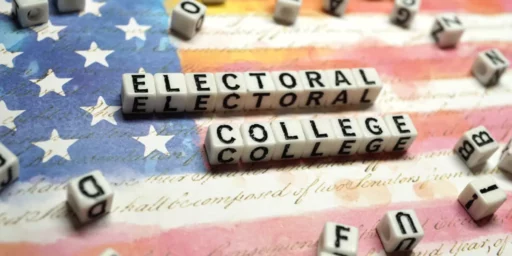
Reyling on Clark Bensen’s PoliData apportionment estimates, Michael Barone finds, in a piece entitled “Demographic Trends Could Make It Harder for Obama and Democrats,”  that several states are likely to gain House seats (and thus Electoral Votes) at the next reapportionment.

Bush 2004 states Kerry 2004 states
Arizona +2 California -1
Florida +2 Illinois -1
Georgia +1 Massachusetts -1
Iowa -1 Michigan -1
Louisiana -1 Minnesota -1
Missouri -1 New Jersey -1
Nevada +1 New York -2
North Carolina +1 Oregon +1
Ohio -2 Pennsylvania -1
South Carolina +1
Texas +4
Utah +1
TOTAL +8 TOTAL -8

The upshot:

[U]nder the new electoral vote distribution, Bush’s 286-to-252 electoral vote margin in 2004 becomes 294-to-244. Bush would have lost in 2004 if Ohio had not gone his way; under the projected post-2010 apportionment, Bush would have won 276-to-262 if Ohio had not gone his way.

Maybe.  We’ll get to that shortly. But Barone follows with this:

The demographic trends reflected in these projections would not prevent Barack Obama from being elected this year and re-elected in 2012, but they would make it marginally more difficult.

Actually, they wouldn’t have any impact on this year at all.  The Census Bureau constantly adjusts its data, which impacts all manner of government allocations.  It does not, however, result in reapportionment.  That, by Constitutional mandate, takes place only once a decade and impacts elections in years ending in 2.

As to the first part of Barone’s analysis, it presumes ceteris paribus.  But ceteris haven’t paribused at all.  Arizona, Texas, Florida and Georgia (at least) are becoming decidedly more Hispanic and the Carolinas and Georgia are becoming more postindustrial and “ideaopolis” oriented.  Further, Virginia, Colorado, and other states are becoming more purple for a variety of reasons.

My guess is that Texas, which is projected to gain 4 seats, and California, which is projected to lose 1, will still be reliably Republican and Democratic, respectively, at the presidential level in 2012.  But the number of Electoral Votes isn’t the only thing that changes over the course of a decade.  I certainly wouldn’t consider all the states in either list above “safe” for McCain or Obama.

Barone linkvia Edward Christie

| Subscribe to RSS Feed | Permalink | Send TrackBack
  Show comments here »
 

McCain: Effects Precede Causes in Iraq

John McCain photoHere’s an interesting Q&A from Katie Couric’s interview with John McCain.

Kate Couric: Senator McCain, Senator Obama says, while the increased number of US troops contributed to increased security in Iraq, he also credits the Sunni awakening and the Shiite government going after militias. And says that there might have been improved security even without the surge. What’s your response to that?

McCain: I don’t know how you respond to something that is as– such a false depiction of what actually happened. Colonel McFarland was contacted by one of the major Sunni sheiks. Because of the surge we were able to go out and protect that sheik and others. And it began the Anbar awakening. I mean, that’s just a matter of history. Thanks to General Petraeus, our leadership, and the sacrifice of brave young Americans. I mean, to deny that their sacrifice didn’t make possible the success of the surge in Iraq, I think, does a great disservice to young men and women who are serving and have sacrificed. [emphasis added]

In other words, John McCain is making the claim that the “Anbar awakening” occurred as a consequence of the Surge. The problem with this claim is that the awakening clearly preceded it. As Dave Wiegel points out, the “awakening” began around September of 2006, while the Surge did not begin until early 2007. Indeed, as Matthew Yglesias points out, Colonel (now-General) McFarland was out of Anbar before the Surge began. Not only that, while a few hundred extra troops were sent into Anbar in early 2007, the vast majority of extra troops were sent into Baghdad. In Baghdad, it does appear that the Surge did help reduce violence (though not in a very sustainable way), but the Anbar Awakening was well underway before the troop surge began.

This is yet one more incident that causes me to be deeply skeptical about McCain’s Iraq campaigning. Given other mistakes of his–mistaking Sunni and Shi’ite, conflating al-Qaeda with the insurgency, falsely accusing Iran of arming al-Qaeda, and other misstatements–I question his interest in learning more actual details about the Iraq conflict. I am just a part-time political pundit who is, frankly, more interested in domestic and science issues than I am in military matters. John McCain should be much more informed about the facts on the ground than I am. At the very least, he should know exactly who the players are.

UPDATE: Writing on this topic for Slate, Christopher Beam points out that the Anbar Awakening was actualy used by President Bush in his 2007 State of the Union address to justify the Surge:

Our military forces in Anbar are killing and capturing al Qaeda leaders, and they are protecting the local population. Recently, local tribal leaders have begun to show their willingness to take on al Qaeda. And as a result, our commanders believe we have an opportunity to deal a serious blow to the terrorists. So I have given orders to increase American forces in Anbar Province by 4,000 troops.

Now, it may well be that the extra troops helped sustain the Awakening (though I suspect that the bribes arms and resources we supplied to the Sunni tribes had a bigger effect). However, there’s really not much of a factual basis to say that the Surge caused the Awakening.

| Subscribe to RSS Feed | Permalink | Send TrackBack
  Show comments here »
 

Blog Diffusion Experiment

Marc Danziger is trying to spread this “Happy Flu” meme, part of an experiment to see how these things spread. If you’ve got a blog and you saw this here first, click “Spread It” and get the code to embed on your own site. As people do that, little circles will appear which will in turn do somethingoranother and demonstrate something about diffusion on the Internet.


| Subscribe to RSS Feed | Permalink | Send TrackBack
 

Obama Running Away with European Vote

Barack Obama would easily win the presidency if the citizens of France, Germany, and the United Kingdom were doing the voting rather than Americans, Gallup reports.

majorities of citizens of France, Germany, and the United Kingdom say that they would like to see Democratic Sen. Barack Obama rather than Republican Sen. John McCain elected U.S. president

Unless I’ve missed something, Europeans aren’t eligible to vote in our elections.   These surveys nonetheless provide interesting insights into how different cultures view things.   Gallup’s Zsolt Nyiri, Frank Newport, and Jeffrey Jones provide this analysis:

In each of these countries, Gallup recorded in 2007 abysmally low approval of U.S. leadership — just 8% approval in Germany, 9% in France, and 20% in the United Kingdom. Much of this likely stems from opposition to the U.S.-led Iraq war, but it could also result from U.S. policy on global warming or reported human rights abuses in Guantanamo Bay.

Obama’s current strength in these countries may be an outcome of the early publicity surrounding his nomination, particularly the fascinating and dramatic primary contest between Obama and the well-known Sen. Hillary Clinton. As a result, during much of the spring McCain was not the subject of nearly the international media attention that Obama was. It is possible, therefore, that McCain could gain some as the visibility of the two U.S. presidential candidates in the worldwide media becomes more equal throughout the next three months. Still, there is no question that Obama has become a “rock star” of sorts in these countries, and whether it is simple name recognition or an awareness of and agreement with his policy positions, he is clearly the favorite at this point.

Of course, Europeans almost always prefer Democrats to Republicans.  Bill Clinton was beloved in Europe even during his lowest points in American public esteem and Ronald Reagan was thought a buffoon across the pond despite his tremendous popularity at home.

| Subscribe to RSS Feed | Permalink | Send TrackBack
  Show comments here »
 

McCain: Obama Wants to Lose War

John McCain trotted out a new sound byte yesterday:

This is a clear choice that the American people have. I had the courage and the judgment to say I would rather lose a political campaign than lose a war. It seems to me that Obama would rather lose a war in order to win a political campaign.

Here’s the video, which provides a little more context:

Marc Ambinder says he used the line at least twice and, indeed, has a slightly different variant on the theme.

Most of the reaction to this has come from the Left and, as one would expect, they find it “outrageous” and “appalling” and “scurrilous.” I think it’s less than that, although a decidedly poor way to advance the debate.  It’s a hamhanded way of creating a memorable parallelism but one that falls flat.

Interestingly, this debate is happening simultaneously with a very much related one over Obama’s interview with Katie Couric on the success of the Surge.  Couric asks him, repeatedly, whether the Surge worked and he says, in effect, that American troops have done a great job in tamping down violence but that it’s not achieving worthwhile goals.

What happens is that if we continue to put $10 billion to $12 billion a month into Iraq, if we are willing to send as many troops as we can muster continually into Iraq? There’s no doubt that that’s gonna have an impact. But it doesn’t meet our long-term strategic goal, which is to make the American people safer over the long term. If that means that we’re detracting from our efforts in Afghanistan, where conditions are deteriorating, if it means that we are distracted from going after Osama bin Laden who is still sending out audio tapes and is operating training camps where we know terrorists’ actions are being plotted.

If we have shifted away from the central front of terrorism as a consequence of enormous and continuing investments in Iraq, then that’s a poor strategic choice. And ultimately, what we’ve got to do is - we have to recognize that Iraq is just one of our … security problems. It’s not the only one.

We’ve got big problems in Afghanistan. We’ve got a significant threat in Iran. We’ve got to deal with Pakistan and the fact that there are safe havens there. Those are all the factors and all the issues that I’ve gotta take into account when I’m president of the United States.

McCain believes that Iraq is a central front, if not the central front, in the war against terrorism and that pulling out short of total victory would be to lose that war.  He thinks he was right and  Obama was wrong on the Surge and resents that he’s not getting more credit for that.  Further, reading between the lines, I gather that he thinks Obama knows the Surge worked and thinks we can win, too, but is unwilling to change course at this stage on his signature issue:  Getting us out of Iraq as soon as possible.

Tactically, the two men’s positions are much more similar than they’d have you believe.  Both will reduce the number of forces in Iraq and would still have a sizable force in Iraq well beyond the sixteen month mark of their presidency.  Their strategic visions, however, are starkly different:  McCain wants to win a war he thinks was necessary and Obama wants to cut his losses on one he believes is a mistake.

Does Obama want to lose the war?  Of course not.  But, from McCain’s perspective, Obama’s plan would snatch defeat from the jaws of victory.

| Subscribe to RSS Feed | Permalink | Send TrackBack
  Show comments here »