
A seemingly silly story from earlier in the week is making the rounds.
UPI (“Indiana judge rules tacos are ‘Mexican-style sandwiches’“):
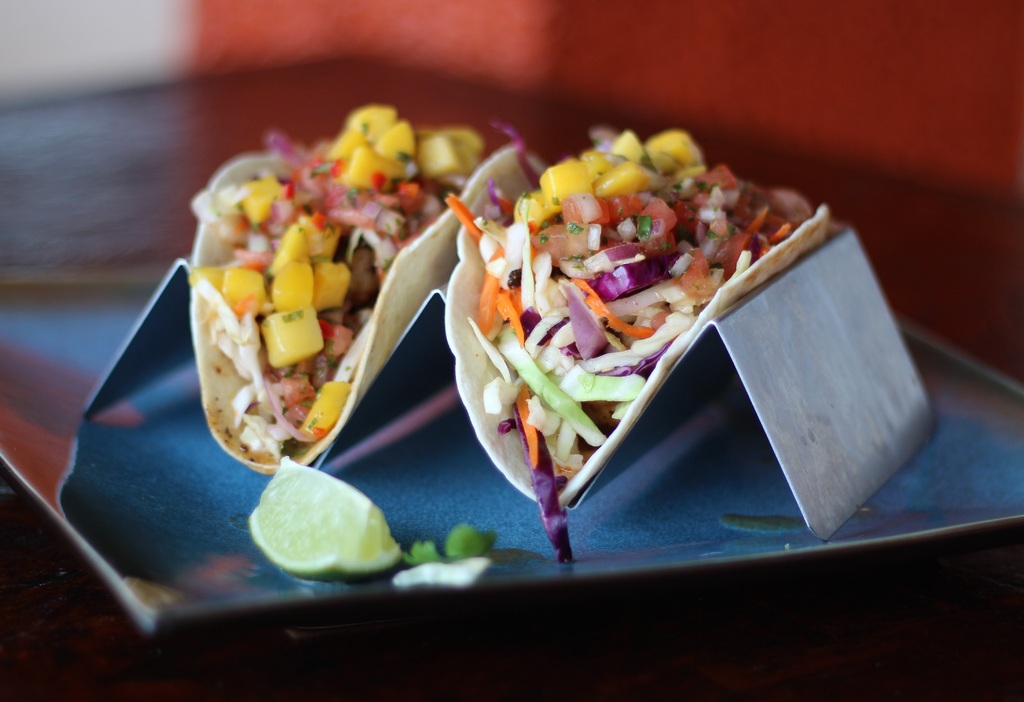
An Indiana judge resolved a legal dispute surrounding a Fort Wayne strip mall by ruling that tacos and burritos “are Mexican-style sandwiches.”
Martin Quintana, the developer behind the new Quintana Plaza strip mall on Jefferson Boulevard in Fort Wayne, entered into a written agreement with the Covington Creek Condominium Association that was intended to keep fast food restaurants from opening in the block of stores.
The agreement allowed for the opening of “made-to-order” sandwich restaurants, with Subway and Jimmy John’s listed as examples, but barred “traditional fast food restaurants such as McDonald’s, Arby’s and Wendy’s.”
The agreement also prohibited any allowed restaurants from offering outdoor seating, drive-through service or alcoholic beverages.
Quintana struck a deal in 2022 to open a location of locally-owned eatery The Famous Taco in the strip mall, and the condo association approved an amendment to allow the restaurant, but the Allen County Plan Commission rejected the amendment, citing the earlier written agreement.
The dispute was brought before Allen Superior Judge Craig J. Bobay, who ruled that the opening of the Mexican restaurant would not require the original agreement to be amended at all.
Bobay wrote: “The proposed Famous Taco restaurant would serve made-to-order tacos, burritos and other Mexican-style food, and would not have outdoor seating, drive through service or serve alcohol. The Court agrees with Quintana that tacos and burritos are Mexican style sandwiches, and the original Written Commitment does not restrict potential restaurants to only American cuisine-style sandwiches.”
Bobay said the original agreement would also apply to made-to-order restaurants offering Greek gyros, Indian naan wraps or Vietnamese Banh mi.
WaPo (“Are tacos and burritos sandwiches? A judge in Indiana ruled yes.“) adds:
A spokesperson for the Allen County Superior Court said Bobay does not comment on cases on his docket. But his ruling brought “the most food-related feedback” to the court, spokesperson John McGauley said. It also probably marked, McGauley added, the first time a ruling from the court had “shown up on Barstool Sports.”
The Indiana court is not the first to consider the legality of a food’s categorization.
- Contrary to Bobay, a Massachusetts judge in 2006 ruled that tacos, burritos and quesadillas were not sandwiches. In that case, Panera Bread sued White City, Mass., for allowing Qdoba to lease space at a shopping center, alleging that the city had violated an exclusivity clause preventing leases with other businesses “that primarily sell sandwiches.” Judge Jeffrey Locke wrote that the agreement did not explicitly define sandwiches, adding that tacos, burritos and quesadillas are not commonly understood to be sandwiches.
- In March 2023, a federal court ruled that American cheesemakers can label their product “Gruyère,” even if it is not made near the French-Swiss border, where the rich cheese originated.
- An Illinois court is considering whether Buffalo Wild Wings falsely advertises its “boneless wings.” Last year, a Chicago resident sued the company, alleging that the wings he had bought were actually chicken breast.
- Even Supreme Court justices have been asked to weigh in on food debates. During a 2018 appearance on “The Late Show with Stephen Colbert,” the comedian asked Justice Ruth Bader Ginsburg to decide whether hot dogs were considered sandwiches. She said they were.
In 2005, the Department of Agriculture published its own view on the sandwich debate with its Food Standards and Labeling Policy Book. The book stipulates that a burrito is a “Mexican style sandwich-like product.”
Another theory that led to much online debate is the Cube Rule, which categorizes food based on the location of the starch. Using the Cube Rule, a burrito is a calzone, or a dish fully enclosed in starch, and a taco is just that — a taco, or a product with starch on the bottom and two opposing sides.
A hot dog is also considered a taco under the Cube Rule.
Fort Wayne’s own food fight dates back to 2022, when resident Martin Quintana, the developer of the shopping center property, wanted to allow the Famous Taco restaurant to open there, but a nearby condominium association raised concerns that the business violated the property’s zoning policy.
Discussions with Fort Wayne’s Plan Commission about whether to allow Famous Taco to open under an amendment to the original zoning policy followed. The policy did not allow fast-food restaurants such as Wendy’s and McDonald’s, but made an exception for sandwich businesses, citing examples including Subway and Jimmy John’s. Restaurants under the exception could not have outdoor seating, drive-through service, alcohol sales or outdoor speakers.
At an October 2022 meeting, Quintana told the Plan Commission that the disagreement over Famous Taco had “kind of became an argument of … is a taco a sandwich or not.”
Ultimately, the commission did not approve the amendment, denying approval for Famous Taco — a decision Quintana asked the court to review in December 2022.
In his decision this week, Bobay ruled that Famous Taco “is permissible under the terms of the original” policy and could classify as a restaurant serving “made-to-order” or Subway-style sandwiches.
With that, at least for now, the judge seems to have wrapped up the sandwich beef in Fort Wayne.
“No amendment was necessary,” Bobay wrote.
While the debate as to whether tacos, hot dogs, and the like meet the definition of “sandwich” is mildly amusing, like most questions of this type the correct answer is “It depends.” And I think Bobay got it wrong here.
In the above-linked case regarding Panera Bread’s exclusive contract to sell sandwiches in a specific strip mall, it seems obvious to me that a Mexican-style restaurant is not a direct competitor and the ruling was therefore correct. In this case, though, whether the exemption that kept out “fast food restaurants” but allowed establishments serving “sandwiches” applied to a taco joint really depends on the intent of the original restriction. And it seems obvious to me that the strip mall and condo association, and not a judge, should have made that call.
Rather clearly, a McDonald’s hamburger and an Arby’s roast beef sandwich are sandwiches. They’re more obviously sandwiches than a taco or Bahn mi. So, why were they explicitly banned but Subway and Jimmy John’s exempted?
Alas, I was unable to find the answer to that question. Left to speculate, though, the former primarily serves hot food, whereas the latter serves cold food almost exclusively (with the few hot items typically pre-cooked and reheated in a microwave). So, my guess is that the condo association was worried about odors emanating from the restaurants. In which case, tacos, gyros, and Bahn mi are much more like McDonald’s and Arby’s than Subway or Jimmy John’s.