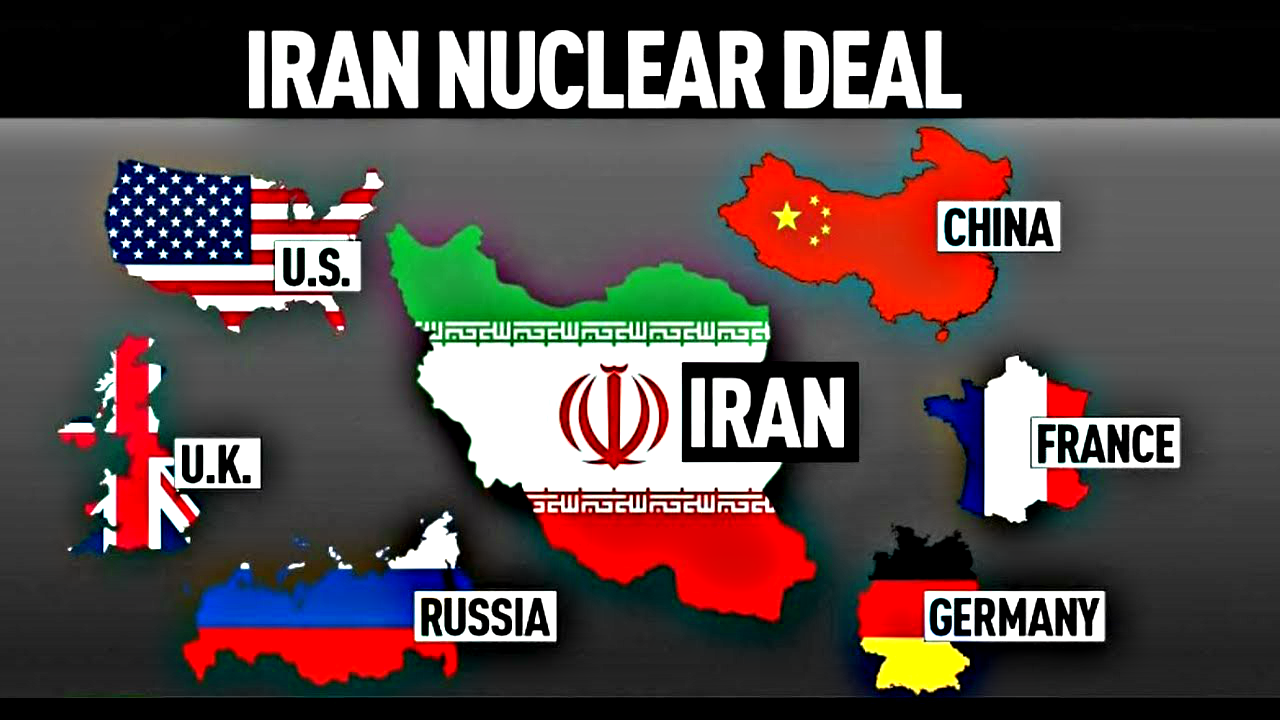

In another step that is likely to ratchet up tensions in the already tense Persian Gulf region, Iran announced on Sunday that it had exceeded an important limitation placed on its nuclear research program by the Joint Comprehensive Plan of Action (JCPOA), and threatened further action in what seems to be an effort to convince European nations to assist it in evading the impact of American sanctions:
Iran said on Sunday that within hours it would breach the limits on uranium enrichment set four years ago in an accord with the United States and other international powers that was designed to keep Tehran from producing a nuclear weapon.
The latest move inches Iran closer to where it was before the accord: on the path to being able to produce an atomic bomb.
President Trump withdrew the United States from the accord last year and in May dealt a crippling blow to Iran’s economy by implementing sanctions intended to cut off its oil sales any where in the world.
In recent weeks, Tehran has retaliated by making deliberate but provocative violations of the accord as part of a carefully calibrated campaign to pressure the West into eliminating sanctions that have slashed the country’s oil exports and crippled its economy.
The steps Iran has taken are all easily reversible. Yet the new move Iran said it was taking on Sunday — to increase enrichment levels beyond the 3.67 percent purity that is the ceiling under the deal — is the most threatening.
Speaking at a news conference on Sunday in Tehran, the deputy foreign minister, Abbas Araghchi, said Iran would take additional steps over the limits of the accord in 60-day intervals unless international powers provide sanctions relief as detailed in the deal.
In violating the limits on uranium enrichment, Tehran still remains far from producing a nuclear weapon. It would take a major production surge, and enrichment to far higher levels, for Iran to develop a bomb’s worth of highly enriched uranium, experts say. It would take even longer to manufacture that material into a nuclear weapon.
But for Iran’s president, Hassan Rouhani, who signaled in May that he would order the country’s engineers to cross both thresholds if Europe did not compensate Iran for American sanctions, the breach of the enrichment limit would be a watershed. He is betting that the United States will back away from crushing sanctions or that he can split European nations from the Trump administration, which the Europeans blame for setting off the crisis.
If he is wrong, the prospect of military confrontation lurks over each escalation.
“It is a back-to-the-future moment,” said Sanam Vakil, who studies Iran at Chatham House, a research institute in London. It has revived a vexing question that policymakers have grappled with for more than a decade:
Is there a permanent way to stop Iran from developing the capability to build a nuclear weapon?
In Israel, where Prime Minister Benjamin Netanyahu has often vowed never to allow Iran to acquire such a weapon, a member of his security cabinet said Tehran’s announcement on Sunday means “it is brushing off the red lines that were agreed.”
“It has begun its march, a march that is not simple, toward nuclear weaponry,” the cabinet member, Yuval Steinitz, said in a television interview.
The foreign ministries of Germany and Britain — both signatories to the deal — each expressed extreme concern and urged Iran to reverse its steps but did not yet call for specific penalties against Iran.
The European strategy for the next few months, one senior diplomat involved in the discussions said, is to buy some time to defuse the crisis. There is no immediate urgency about starting the process for “snapback” sanctions — exercising provisions of the deal to punish Iran by swiftly restoring lapsed penalties.
European officials, led by the French, hope to begin some kind of negotiation process that would make that unnecessary. The Europeans largely view President Trump as the instigator of the nuclear deal’s demise.
In a phone conversation on Saturday seeking to head off a confrontation, President Emmanuel Macron of France had asked Mr. Rouhani to explore by July 15 whether a new negotiation was possible. Mr. Rouhani agreed, according to news reports, but said that “lifting all sanctions can be the beginning of a move between Iran and the six major powers.”
So far, Mr. Trump and his top aides have vowed to continue using “maximum pressure” to force Iran to return to the negotiating table and to accept more stringent restrictions. But some of those who had negotiated the last deal say that reaching another one may now be much harder.
The Trump administration “has discredited the very concept of negotiations, and it has strengthened the hand of those inside Iran who would argue that it is no use talking to the Americans because you can never trust them,” said Rob Malley, a former National Security Council official who helped negotiate the 2015 accord.
This announcement came just days after the Islamic Republic had announced that it had breached another limitation of the JCPOA, this one related to the quantity of enriched uranium that it could keep stockpiled. This limitation deals with the quality of the enriched uranium that would be stockpiled, taking it higher than the limits set by the agreement. It is worth noting that both limitations, while an important part of the agreement, are somewhat symbolic in that the amount and purity of the uranium that the Islamic Republic would be stockpiling going forward is still far below what it would need to actually make a bomb and even further short if what it would need to build a stockpile of nuclear weapons. Additionally, both steps are easily reversible if the Iranians decide to back away. At the same time, though, the fact that Tehran has decided to test the limits of the JCPOA just over a year after the United States withdrew from the agreement and reimposed sanctions is an indication that those sanctions are having an impact, that Iran is closer than ever to renouncing the agreement itself, and that tensions in the Persian Gulf are like to increase in the coming weeks and months.
As with the announcement made at the beginning of the month, it seems clear that Iran’s motivation for taking these actions is to attempt to provoke the Europeans into providing some relief from the sanctions that have been imposed by the United States, sanctions that have had a negative impact on Iran’s economy and on its ability to rely on oil revenue to generate hard currency and increase investment. For their part, the Europeans have been involved in behind the scenes negotiations to try to keep the JCPOA alive but have yet to take any moves that would be seen as an open rebuke of American policy toward Iran, in part over fears that European companies doing business with Iran could end up being hit with American sanctions themselves. The moves also seem to be at least in part aimed at trying to prod the United States to reverse course, as unlikely as that seems at the moment.
All of this is unfolding at the same time that tensions have been rising in the Persian Gulf region over the past several months. During that period, we’ve seen Iran shoot down a reconnaissance drone that it says was in Iranian airspace and which the United States says was over international waters. In response to that and to recent attacks on tankers in the Gulf of Oman that the United States has blamed on Iranian forces, President Trump first ordered and then canceled a retaliatory strike on Iranian forces. Then, the United States imposed new sanctions on Iran in response to the heightening of tensions in the Persian Gulf. As noted at that point, though, those sanctions were unlikely to work and the Trump Administration has very few options in the regions.
This latest move by Iran, while understandable, is likely to increase these tensions, and to lead the Trump Administration to try to persuade the Europeans to reimpose sanctions on Iran. At the same time, though, it’s possible that this move, which could be easily reversed by the Islamic Republic by agreeing to turn over its excess processed uranium as called for under the agreement, could be a step by Iran to try to get something more out of the other signatories to the JCPOA to offset the American sanctions. This is what happened earlier this year when Iran technically surpassed the JCOPOA limits regarding heavy water only to pull back from the brink after getting some concessions from European JCPOA signatories. Where we go from here is really anyone’s guess.