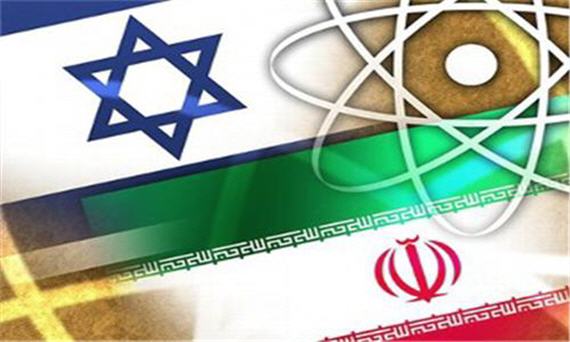

September’s issue of The Atlantic includes a long, well-written, must read piece by Jeffrey Goldberg about the continued rumors that, absent international action that brings it to a stop, Israel will take it upon itself to attempt to bring Iran’s nuclear program to an end. There’s much in there worth reading but let’s concentrate on two areas.
First, Goldberg discusses the likelihood that Israel will actually follow through on the veiled threats of an attack that it’s made over the years. As Goldberg notes, it is possible that the diplomatic efforts and sanctions that the Obama Administration is pursuing will work, but if they don’t the likely scenario is easy to see:
What is more likely, then, is that one day next spring, the Israeli national-security adviser, Uzi Arad, and the Israeli defense minister, Ehud Barak, will simultaneously telephone their counterparts at the White House and the Pentagon, to inform them that their prime minister, Benjamin Netanyahu, has just ordered roughly one hundred F-15Es, F-16Is, F-16Cs, and other aircraft of the Israeli air force to fly east toward Iran—possibly by crossing Saudi Arabia, possibly by threading the border between Syria and Turkey, and possibly by traveling directly through Iraq’s airspace, though it is crowded with American aircraft. (It’s so crowded, in fact, that the United States Central Command, whose area of responsibility is the greater Middle East, has already asked the Pentagon what to do should Israeli aircraft invade its airspace. According to multiple sources, the answer came back: do not shoot them down.)
In these conversations, which will be fraught, the Israelis will tell their American counterparts that they are taking this drastic step because a nuclear Iran poses the gravest threat since Hitler to the physical survival of the Jewish people. The Israelis will also state that they believe they have a reasonable chance of delaying the Iranian nuclear program for at least three to five years. They will tell their American colleagues that Israel was left with no choice. They will not be asking for permission, because it will be too late to ask for permission.
(…)
I have been exploring the possibility that such a strike will eventually occur for more than seven years, since my first visit to Tehran, where I attempted to understand both the Iranian desire for nuclear weapons and the regime’s theologically motivated desire to see the Jewish state purged from the Middle East, and especially since March of 2009, when I had an extended discussion about the Iranian nuclear program with Benjamin Netanyahu, hours before he was sworn in as Israel’s prime minister. In the months since then, I have interviewed roughly 40 current and past Israeli decision makers about a military strike, as well as many American and Arab officials. In most of these interviews, I have asked a simple question: what is the percentage chance that Israel will attack the Iranian nuclear program in the near future? Not everyone would answer this question, but a consensus emerged that there is a better than 50 percent chance that Israel will launch a strike by next July.
Of course, as Goldberg notes, it is in Israel’s interest, and, arguably, the interest of the United States, to create the impression that Israel is a hair-trigger away from launching an attack on Iran that stands a very good chance of crippling Iran’s nuclear program and raising the tension level in the Middle East to levels unseen since in quite some time. There have even been some suggestions that the United States and Israel are playing a massive game of “Good cop, bad cop” in an effort to get the Iranians to act, although given the level of apparent distrust between the Obama and Netenyahu Administration’s, that particular theory seems more than a little implausible.
So, let’s accept for the moment that Goldberg is right that the odds of an Israeli airstrike increase as we get closer to July 2011, what might the consequences ? Goldberg argues that it won’t be quite as easy, or as simple, as Israel’s 1982 attack on Iraq’s nuclear reactor:
When the Israelis begin to bomb the uranium-enrichment facility at Natanz, the formerly secret enrichment site at Qom, the nuclear-research center at Esfahan, and possibly even the Bushehr reactor, along with the other main sites of the Iranian nuclear program, a short while after they depart en masse from their bases across Israel—regardless of whether they succeed in destroying Iran’s centrifuges and warhead and missile plants, or whether they fail miserably to even make a dent in Iran’s nuclear program—they stand a good chance of changing the Middle East forever; of sparking lethal reprisals, and even a full-blown regional war that could lead to the deaths of thousands of Israelis and Iranians, and possibly Arabs and Americans as well; of creating a crisis for Barack Obama that will dwarf Afghanistan in significance and complexity; of rupturing relations between Jerusalem and Washington, which is Israel’s only meaningful ally; of inadvertently solidifying the somewhat tenuous rule of the mullahs in Tehran; of causing the price of oil to spike to cataclysmic highs, launching the world economy into a period of turbulence not experienced since the autumn of 2008, or possibly since the oil shock of 1973; of placing communities across the Jewish diaspora in mortal danger, by making them targets of Iranian-sponsored terror attacks, as they have been in the past, in a limited though already lethal way; and of accelerating Israel’s conversion from a once-admired refuge for a persecuted people into a leper among nations.
And, as Rick Moran points out, such an attack could precipitate a crisis at precisely the time that there isn’t anyone in the world with the will to step in and put a stop to it:
Unleashing Hezb’allah against the western world, stirring up trouble in Iraq by ordering the Shia militias into the streets, not to mention a missile campaign against Israel that could kill thousands (at which point Israel may decide that to save its people, it must expand its own bombing campaign, escalating the conflict to the next level) – this alone could ratchet up tensions causing the world to start choosing up sides.
And no America with the will or the self-confidence to step in and assist the world in standing down.
Obama’s foreign policy is not anti-American, unpatriotic, or designed to favor Muslims. It’s just weak. The president has made the conscious decision that the US is too powerful and needs to defer to supra-national organizations like the UN, or regional line ups like NATO or the Arab League when conflict is threatened. “First among equals” is not rhetoric to Obama. He means it. He has been thoroughly indoctrinated with the idea that most of the world’s troubles have been caused by a too-powerful United States and hence, only deliberately eschewing the promotion of American interests can redress this sin.
This will be the first world crisis since the end of World War II where American power and prestige will not be used to intervene in order to prevent catastrophe. Obama is betting the farm that his worldview will be more conducive to defusing a crisis than the more realpolitik and pragmatic point of view that has dominated American foreign policy for 65 years.
It’s a heck of a gamble to take, because if it doesn’t work we’re left with a situation that may well be beyond our ability to defuse before it explodes into regional war. The domestic consequences would be fairly dire as well; can you say $ 5.00/gallon gasoline ? At that point, the United States would be forced to act, and it wouldn’t be an easy job.
I honestly don’t know what the answer to the Iranian nuclear question is.
The prospect of the likes of the Islamic Republic possession nuclear weapons is not something I look forward to. Then again, I’m still not all that comfortable with the idea of Pakistan having nuclear weapons, and don’t get me started about North Korea. Nonetheless, Pakistan has had those weapons for more than a decade now and they haven’t used them. Even same goes for North Korea. Both countries, of course, have engaged in nuclear proliferation, and that may be the greatest danger of an Iranian nuclear weapons program, not that they’d use them, but that they’d teach others how to make them. It’s entirely possible, then, that a nuclear-armed, or nuclear-capable, Iran, may not end up being as much of a threat as we fear.
Israel, however, doesn’t seem to be inclined to wait to find out how things will turn out. Their current leadership views a nuclear-armed Iran as an existential threat to Israel and, whether or not that is actually true, they’re likely to act accordingly. Unfortunately, their actions are likely to have consequences that we’ll all have to deal with.
The most frustrating thing about reading Goldberg’s article, though, is the realization that you’re left with the impression that, no matter what the United States and/or Israel does, the Middle East is likely to become a much more dangerous place over the next couple years.As Ed Morrissey notes, that’s been apparent over the past several years and yet the whole thing ends up being very mundane when you just read about it:
The Iranian program is like having a bomb in your lap knowing that any wire you cut will detonate it, so you sit there and fidget with it in hopes that it’ll just sort of fizzle out on its own. Sit there long enough and even a situation as dangerous as that will start to seem boring. Until the bomb goes off.
We may get to experience that moment soon.